
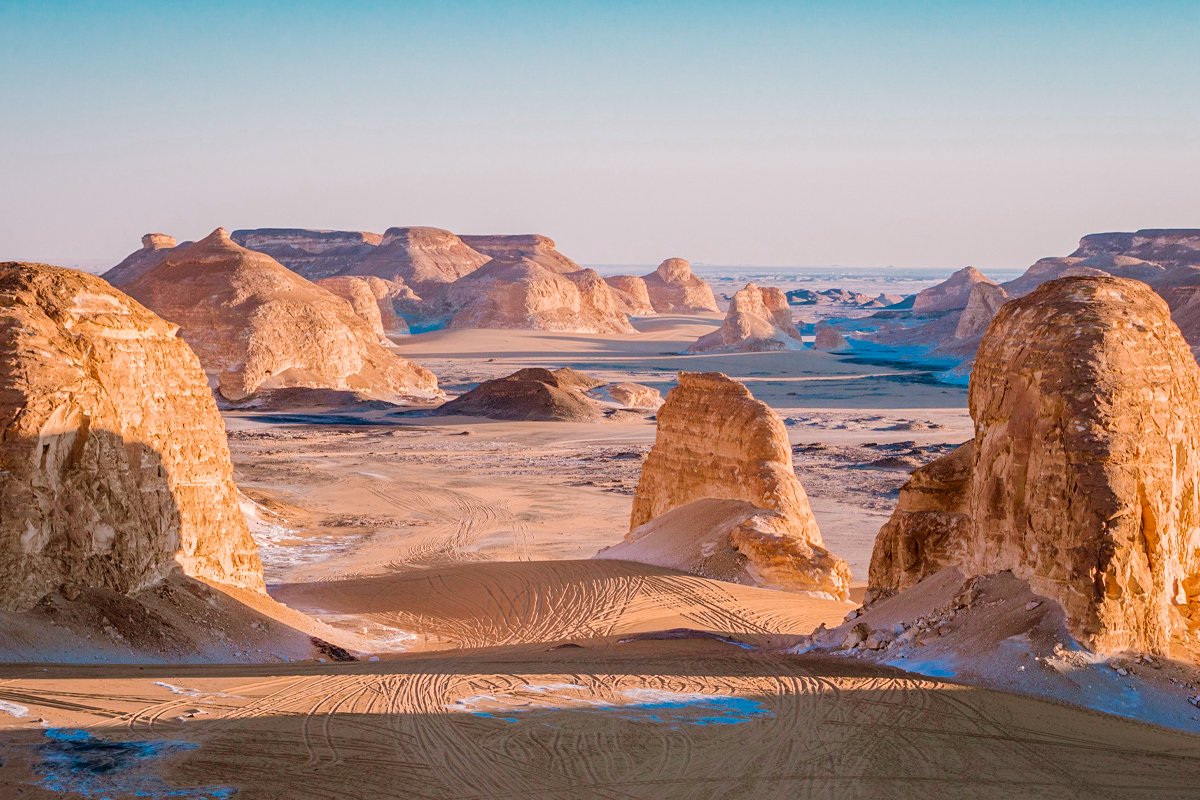

Agabat Valley, also known as Wadi El Agabat, is one of the most remarkable natural landscapes in Egypt, located deep in the Western Desert between the White Desert National Park and Farafra Oasis. It sits around 600 km southwest of Cairo and can only be reached by 4×4 desert vehicles, as there are no paved roads leading into the valley. The area is part of a protected natural reserve, offering complete seclusion and untouched desert scenery.
The valley is famous for its dramatic limestone and chalk rock formations, shaped over millions of years by wind and water erosion when the region was once covered by an ancient sea. These formations create a surreal landscape of white dunes and narrow passageways, often compared to a natural sculpture museum.
Agabat Valley has no hotels, restaurants, or services, which makes it ideal for camping under the stars and experiencing pure silence. The best time to visit is from October to April, when daytime temperatures range between 18 and 28°C and evenings are cool and comfortable. Because of the challenging terrain, entry is only possible with a trained local guide and professional desert drivers.
If you want to enjoy a memorable trip in Egypt, check out our Egypt Excursions with our certified Egyptologist and Egypt travel guide.
What makes Agabat Valley special
Agabat Valley feels like a natural amphitheater shaped by wind and time. The rock faces show layered textures, wind-carved hollows, and creamy white surfaces that glow at sunrise and sunset. Photographers and nature-lovers call it a surreal environment: the combination of stark white formations, ochre dunes, and deep-blue skies produces images that look like paintings rather than photographs.
Beyond its visual drama, the valley offers solitude.
Unlike more accessible tourist sites, Agabat remains lightly visited, so your experience will be dominated by silence, wide horizons and an uninterrupted view of the Milky Way at night.
Best time to visit Agabat Valley
The optimal season runs from October through April. Days are pleasantly warm for hiking and sightseeing, while nights can be cool—ideal for comfortable camping.
Summer months (May–September) bring extreme heat; daytime activities become strenuous and are best avoided unless you plan only sunrise/sunset outings. For photographers and campers seeking comfortable conditions, the winter and shoulder months are the best choice.
How to reach Agabat Valley
Agabat Valley is remote and not accessible by regular road transport. Reaching it typically requires:
-
A 4×4 desert vehicle operated by an experienced driver.
-
A guided safari starting from Bahariya Oasis, Farafra Oasis, or Cairo (multi-day).
-
Local permits and knowledge of desert navigation, which guides provide.
Most travelers join a multi-day White Desert or Farafra safari that includes Agabat as a highlight. Independent attempts to reach the valley without a professional guide are strongly discouraged due to shifting sands, trackless terrain, and limited services.
Things to do in Agabat Valley
4×4 exploration
Driving through the valley and surrounding dunes is an adventure in itself. Expect steep dunes, narrow passes, and sudden viewpoints that change with every turn.
Sunrise and sunset viewing
The valley’s limestone faces take on warm hues at golden hour. Plan both sunrise and sunset stops for dramatically different light and atmosphere.
Camping and night sky observation
Camping here is an exceptional experience. With almost no light pollution, the Milky Way and constellations are vivid—perfect for long-exposure photography and quiet stargazing.
Sand activities
Try sandboarding on gentle slopes or simply wander the dunes for panoramic compositions.
Photography
From close-up textures to sweeping panoramas, Agabat provides endless subjects: rock patterns, wind-sculpted ridges, shadow play, and nocturnal skies.
Combine nearby sites
Many safari itineraries link Agabat with Crystal Mountain, the White Desert, and Magic Spring (Ain El Khadra)—each adds a contrasting element to your desert experience.
Don’t miss to check our Egypt Vacation Packages
What to pack for Agabat Valley?
Packing smart ensures comfort and safety:
-
Layered clothing: Warm layers for nights and light, breathable garments for daytime.
-
Sturdy footwear: Closed shoes with good grip for rocky walking.
-
Sun protection: Wide-brim hat, high-SPF sunscreen, and sunglasses.
-
Water supply: Carry more water than you think you’ll need. Guides usually provide supplies, but bring a refillable bottle.
-
Sleeping gear: If your tour doesn’t supply them, a warm sleeping bag and a sleeping mat are essential.
-
Lighting: Headlamp or flashlight with spare batteries.
-
Camera kit: Extra batteries, memory cards, and a tripod for night shots.
-
First-aid basics: Plasters, antiseptics, medication for stomach upsets, and any personal prescriptions.
-
Cash: Small bills for tips and incidental purchases at oasis stops.
Wildlife and environment
The valley sits within a fragile desert ecosystem. You may encounter desert-adapted birds, reptiles and small mammals that have evolved to survive in sparse conditions. Vegetation is sparse but present around seasonal water sources. Respect wildlife by observing from a distance and avoiding disturbance.
Leave no trace: remove litter, avoid breaking or climbing delicate rock formations, and follow your guide’s instructions about campfire use and waste disposal.
Safety Tips for Visiting Agabat Valley
Guided travel is essential. Professional guides know how to read desert terrain, manage fuel and water logistics, and handle navigation and emergencies. They also secure necessary permissions for protected areas.
Vehicle preparedness: Ensure your tour operator maintains reliable, well-equipped 4×4 vehicles with spare tires, recovery gear, and sufficient fuel reserves.
Weather awareness: Desert weather can change—hot days, cold nights, and sudden winds. Check forecasts and follow guide’s advice for timing hikes and drives.
Communication: Mobile reception is unreliable. Ask your operator about satellite or radio backup for emergencies.
Recommended Agabat Valley Tour Options
1–2 day excursions: Ideal for travelers short on time. These typically depart from Bahariya or Farafra and combine Agabat with the White Desert or Crystal Mountain.
3–4 day expeditions: Allow a relaxed pace, multiple photography sessions, extended stargazing and visits to several oases. These are best for serious photographers and nature enthusiasts.
Custom private safaris: Tailored itineraries for families, small groups, or clients seeking a bespoke experience, with flexible activities and upgraded camping setups.
- 2 Days White Desert Safari
- 3 Days Tour to White Desert and Bahariya
- 7 Days Safari Tour to Cairo & Bahariya Oasis
- Safari Tour in Cairo, Bahariya Oasis and White Desert
Why Agabat Valley Should Be on Your Egypt Itinerary
Agabat Valley is not a mainstream tourist stop—it’s a quiet escape where the natural landscape is the main attraction. Nothing compares to watching the sun set behind limestone peaks, then sitting beside a desert fire under a sky bursting with stars. For those who crave emotional space, stillness and raw nature, this is one of Egypt’s most unforgettable places.
Whether you pair it with the White Desert or travel as part of a longer Western Desert route, Agabat promises memories unlike anywhere else in the country.
Book your Agabat Valley adventure
Plan with a reputable desert operator who provides licensed guides, well-maintained 4x4s, and transparent itineraries. Confirm what’s included—meals, camping gear, permits and emergency support—before you book.
Experience the silence, the starfields and the sculpted rocks of Agabat Valley—an unforgettable chapter in any Egypt journey.


0 Comment