
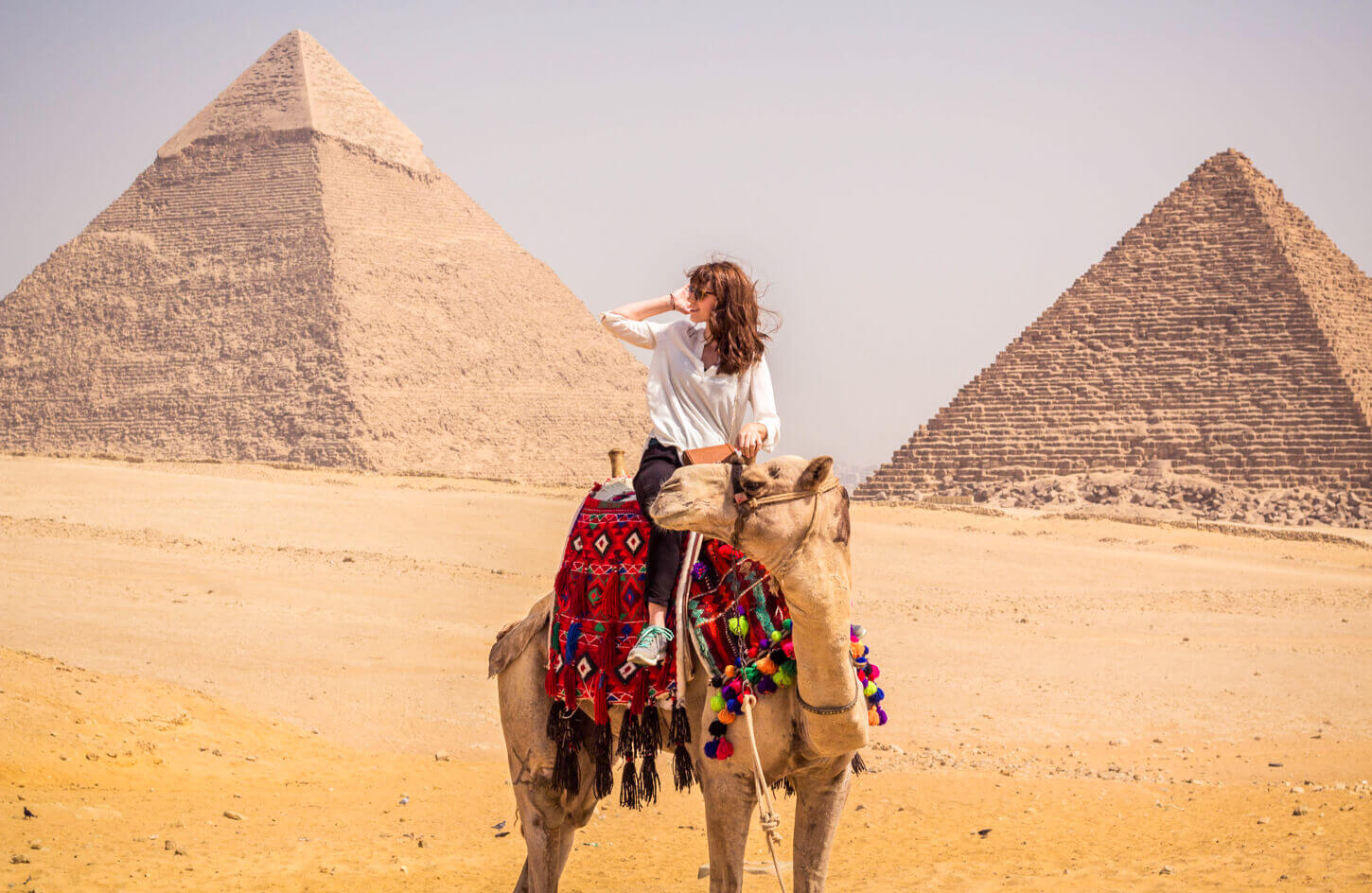

What to Expect When Visiting the Pyramids?
Visiting the Pyramids of Giza is a profound travel experience, but navigating the site requires clear preparation. Located on the rocky desert edge of the Giza Plateau, the ancient archaeological complex is vast, fully exposed to the elements, and highly active.
When you arrive, expect monumental scale. The structures have stood for over 4,500 years and dominate the landscape. You will encounter bustling crowds, working camels, and independent local vendors offering souvenirs or rides. Walking across the sandy, uneven limestone terrain requires a reasonable level of physical stamina. Understanding the layout and mentally preparing for a busy environment ensures a rewarding adventure at the Pyramids of Giza.
To help you seamlessly navigate this ancient wonder, this complete guide breaks down everything from transportation and costs to strict packing essentials and crowd-busting strategies.
How to Get to the Pyramids of Giza from Cairo
The ancient complex sits roughly 15 to 20 kilometers west of downtown Cairo. Travelers can access the site using several straightforward transport options:
-
Ride-Hailing Applications: Using a mobile app like Uber from central Cairo is highly efficient. The drive typically costs 100 to 150 EGP and takes 30 to 45 minutes, depending on local traffic flow.
-
Private Chauffeured Vehicle: Arranging a private car through a local provider offers seamless door-to-door comfort, keeping an air-conditioned vehicle waiting between your sightseeing stops.
-
Public Metro and Microbus: Budget travelers can take Metro Line 2 to Giza Station, then transfer to a local microbus traveling down Al-Haram Street toward the monument gates.
How Much Does It Cost to Enter the Giza Plateau?
The entry system is digital and cashless. Visitors must buy entrance passes online via the official government portal or use a credit or debit card at the main gate ticketing windows. Cash is not accepted at the ticket counter.
| Ticket Option (International Visitors) | Adult Price | Student Price |
| Giza Plateau General Admission | 700 EGP | 350 EGP |
| Great Pyramid of Khufu (Interior) | 1,500 EGP | 750 EGP |
| Pyramid of Khafre (Interior) | 280 EGP | 140 EGP |
| Pyramid of Menkaure (Interior) | 280 EGP | 140 EGP |
Top Activities on the Plateau
Beyond viewing the massive stone structures, top activities on the plateau include capturing panoramic photographs from the high-desert overlooks, walking down to see the Great Sphinx up close, exploring the stone-walled Valley Temple, and viewing the historic tombs of ancient nobles.
Plateau Ticket vs. Individual Pyramid Entry
A common point of confusion is what the standard pass includes. Your base Giza Plateau ticket covers entry to the entire open-air archaeological park, the Sphinx area, and the immediate exterior of the monuments. If you want to physically walk inside the deep internal chambers of Khufu, Khafre, or Menkaure, you must purchase a specific individual entry ticket for that particular pyramid.
How far is the newly opened Grand Egyptian Museum (GEM) from the pyramids?
The Grand Egyptian Museum (GEM) is located exactly 2 kilometers northwest of the pyramid complex. Traveling between the two sites takes a brief 5-minute taxi or shuttle ride. This close proximity makes it simple to combine a morning visiting the Pyramids of Giza with an afternoon exploring the world-class artifacts at the GEM.
Is It Safe and Advisable to Hire a Camel, Horse, or Carriage Driver Directly at the Complex?
Hiring an animal handler directly at the main gates requires careful negotiation. Independent operators frequently use assertive sales techniques or alter pricing descriptions mid-ride.
To secure a predictable experience, it is best to organize camel or horse excursions in advance through an established travel operator. If you choose to hire a driver on-site, utilize the designated government-regulated staging zones, confirm the exact price before mounting the animal, and verify that the fee includes both the departure and the return trip.
Can You Enter Inside the Pyramids?
Yes, the interior burial chambers are accessible to the public. Inside the Great Pyramid of Khufu, visitors ascend through the narrow, steeply inclined Grand Gallery to reach the stone-lined King’s Chamber housing the ancient granite sarcophagus.
Physical Considerations: Entering the monuments is not recommended for travelers who experience claustrophobia or have limited physical mobility. The internal corridors are narrow, low-ceilinged, hot, and humid, requiring you to walk in a bent posture up steep wooden ramps.
Is There a Dress Code for the Pyramids in Egypt?
There is no official or legally mandated dress code for visiting the Pyramids of Giza, but dressing with consideration for local cultural preferences and the desert environment is highly recommended.
Women
Light, loose-fitting clothing provides comfort and modesty. Linen trousers, maxi dresses, or long skirts paired with shirts that cover the shoulders are ideal choices. Carrying a lightweight cotton scarf is helpful for sun protection.
Men
T-shirts, collared shirts, lightweight trousers, or long utility shorts are appropriate. Sleeveless tank tops are less common and generally avoided out of respect for local customs.
All Visitors
Sturdy, closed-toe walking shoes or athletic sneakers are necessary for safety. The terrain is sandy, hot, and filled with loose stones. Travelers should also wear a wide-brimmed hat, UV-filtering sunglasses, and high-factor sunscreen to shield against intense solar reflection.
Don’t miss reading the full article about What to Wear: Advice For Women Traveling In Egypt
What is the Best Time of Day to Visit the Pyramids of Giza?
The most favorable time to arrive is at 7:00 AM when the gates open. Arriving early allows you to explore before the arrival of large tour buses, avoid the intense midday desert heat, and experience the ancient landscape during quiet hours. The early morning light also provides excellent conditions for clear photography.
Best Season to Visit the Pyramids of Giza?
The prime season for visiting the Pyramids of Giza runs from October through April. During these cooler months, daytime temperatures average between 20°C and 26°C, making extended walking across the plateau comfortable. The summer season from June to August brings intense heat, with temperatures regularly climbing above 40°C.
Are the Pyramids of Giza Worth Visiting?
The Giza complex remains an unparalleled historical destination. As the final standing wonder of the ancient world, seeing the architectural precision and grand scale of the monuments in person provides an educational depth that media cannot replicate.
Frequently Asked Questions About Visiting the Pyramids of Giza
Is it safe to visit the Pyramids of Giza?
The Giza Plateau maintains rigorous safety standards. The area is thoroughly monitored by dedicated tourism police units and handles millions of international leisure travelers smoothly every year.
Are camel and horse rides safe?
The rides are physically stable if you follow your handler’s guidance. Always check that the animal appears healthy and well-maintained. Hold the saddle firmly when the animal rises or kneels, as the forward and backward tilting motion is sudden.
When is the best time to visit the Pyramids of Giza?
The ideal timeframe is between 7:00 AM and 9:30 AM during the autumn, winter, and spring months from October to April.
What are the opening hours of the Pyramids of Giza?
The Giza Plateau operates daily from 7:00 AM to 5:00 PM.
Can I visit the Pyramids of Giza at night?
The main archaeological park closes to general visitors in the late afternoon. However, the site can be viewed after dark by purchasing a ticket to the evening Sound and Light Show or by visiting a panoramic rooftop restaurant in the immediate Giza district.
Are the Pyramids open during Ramadan or public holidays?
The complex remains open every day of the year, including during major holidays and the holy month of Ramadan. During Ramadan, daily operating hours shift slightly, with gates closing earlier in the afternoon, typically between 3:00 PM and 4:00 PM.
How long does it take to explore the Pyramids?
A standard tour covering the main panoramic views, the Great Sphinx exterior, and walking around the valley temples takes approximately 3 to 4 hours. If you add tickets to explore inside the Great Pyramid, allocate 4 to 5 hours.
Do entry timings differ for going inside the Pyramids?
The inner chambers of the individual pyramids can close temporarily for scheduled maintenance or air quality ventilation adjustments, often between 12:00 PM and 1:00 PM. Daily interior tickets for Khufu are limited, so morning booking is beneficial.
Where can I book a ticket to the Pyramids of Giza?
Tickets can be secured digitally on the official web portal of the Egyptian Ministry of Tourism and Antiquities or purchased directly at the entrance using a valid payment card.
Can I visit the Pyramids independently without a guide?
Independent exploration is fully permitted. When exploring without an organized tour, travelers can manage interactions with local souvenir sellers and carriage operators with a polite, clear “La, Shukran,” which translates to “No, thank you.”


0 Comment