
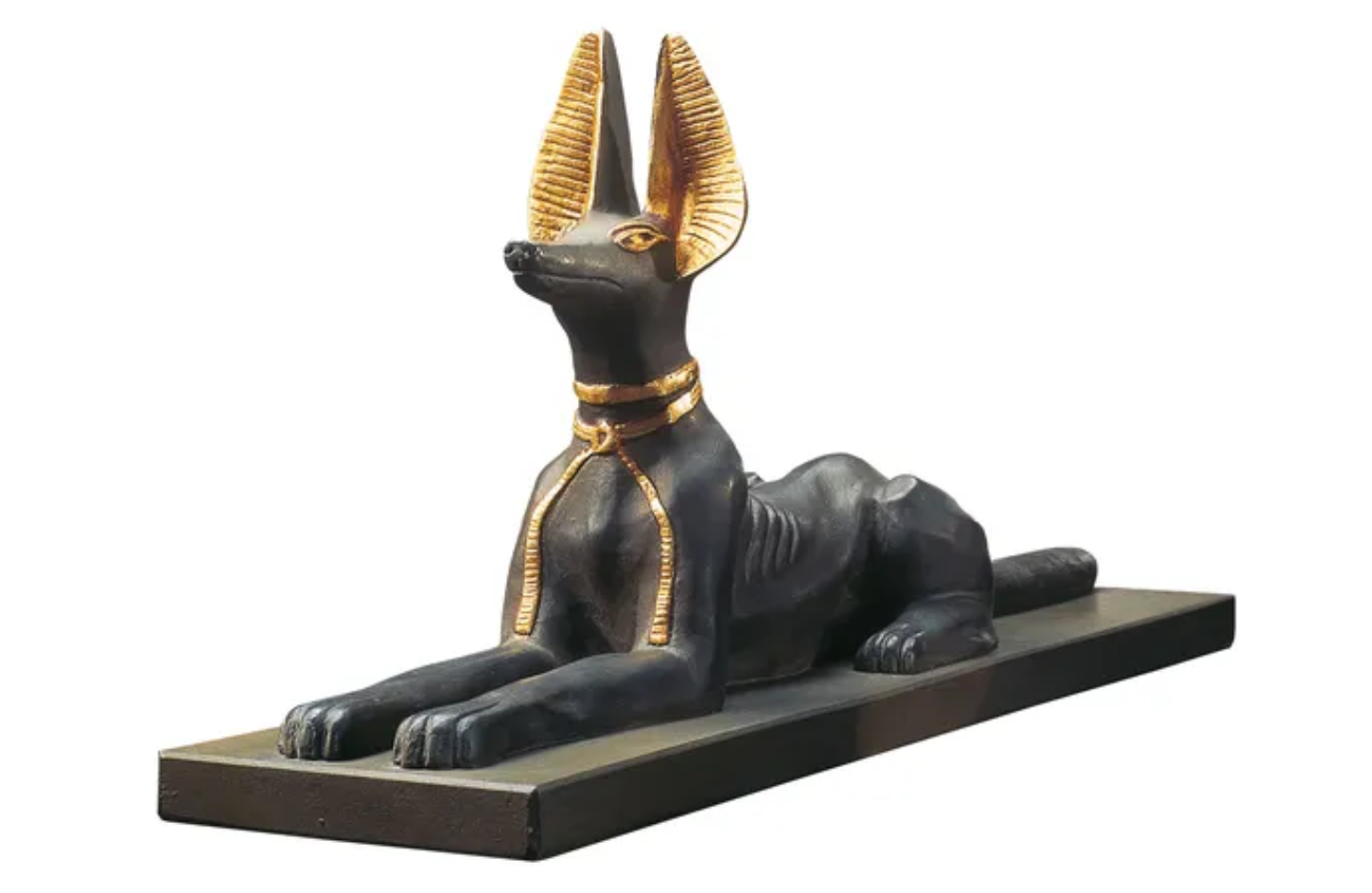

Anubis the ancient Egyptian god of death remains one of the most iconic figures in Egyptian mythology. Recognized by his distinctive jackal head, Anubis was far more than a symbol of death—he was the protector of tombs, the guardian of the dead, and the divine guide who helped souls navigate the journey to the afterlife. As Anubis, the Egyptian god, he played a vital role in ancient Egyptian religious beliefs, ensuring that burial rituals were performed correctly and that the deceased received a fair judgment before entering the next world.
Often referred to as the Egyptian death god with a dog’s head, Anubis was closely associated with mummification and funerary practices. Unlike modern perceptions of death, the Ancient Egyptian Anubis god was viewed as a protector rather than a figure to be feared. His responsibility was to safeguard the deceased, preserve their bodies, and oversee the sacred ceremonies that prepared them for eternal life.
Known as both the God of the Necropolis and the Lord of the Necropolis, the Egyptian deity Anubis protected cemeteries and burial grounds throughout ancient Egypt. He is perhaps best known for his role in the famous Weighing of the Heart ceremony, where he measured a person’s heart against the feather of Ma’at to determine whether they were worthy of entering the afterlife.
Today, the legacy of Anubis the god of death continues to fascinate historians, archaeologists, and travelers alike. From the tombs of the pharaohs to the treasures displayed in museums, Anubis remains a powerful symbol of ancient Egyptian spirituality and one of the most important gods in the Egyptian pantheon.
Who is Anubis, the Egyptian god? Understanding the Egyptian Deity Anubis
Anubis, the Egyptian god, is one of the oldest and most important deities in ancient Egyptian religion. The Ancient Egyptian Anubis god was primarily associated with death, burial, and the journey to the afterlife.
He is most commonly depicted as a man with the head of a jackal, which is why he is often referred to as the Egyptian death god with a dog head. This unique appearance was not random—it symbolized protection, vigilance, and a connection to the desert lands where cemeteries were located.
As the Egyptian deity Anubis, he held several powerful titles, including:
- Lord of the Necropolis
- God of the Necropolis
- Guardian of the Dead
- Guide of Souls
These titles highlight his central role in protecting burial grounds and ensuring that the dead were treated with respect and care.
The Origins of Ancient Egyptian Anubis God in Early Egyptian Civilization
The Ancient Egyptian Anubis god dates back to the earliest periods of Egyptian civilization, long before many other well-known gods gained prominence. During the Old Kingdom, Anubis was considered the primary god of death, responsible for overseeing all aspects of the afterlife.
Before the rise of Osiris, Anubis was the main deity associated with the dead. Over time, his role evolved, but he remained essential as the guardian and guide who prepared souls for judgment.
His early worship reflects how important death and burial were in Egyptian culture. The Egyptian deity Anubis was not just a mythological figure—he was deeply integrated into daily life, especially in funerary practices.
Why is Anubis known as the Egyptian Death God with a dog’s head
The title, the Egyptian Death God with a dog’s head, comes from Anubis’ distinctive appearance. His jackal head represents animals commonly found near cemeteries in ancient Egypt.
Jackals were often seen roaming desert burial grounds, which led Egyptians to associate them with death and protection. Instead of viewing these animals negatively, Egyptians believed they could guard the dead, making them the perfect symbol for Anubis, the Egyptian god.
The black color of Anubis also carries deep meaning. While black is often linked to death, in ancient Egypt, it symbolized the following:
- Fertility
- Rebirth
- The rich soil of the Nile
This reinforces Anubis’ role not just as the Anubis god of death but also as a symbol of renewal and eternal life.
Anubis, God of Death and His Role as Lord of the Necropolis
As the Lord of the Necropolis, Anubis was the ultimate protector of cemeteries and burial sites. A necropolis, meaning “city of the dead,” was a sacred space where the deceased were laid to rest.
The God of the Necropolis had several key responsibilities:
- Protecting tombs from robbers and animals
- Watching over the dead
- Ensuring proper burial rituals
- Guiding souls safely into the afterlife
The Egyptian deity Anubis was seen as a guardian who maintained order and respect in these sacred spaces. His presence ensured that the transition from life to death was smooth and protected.
Anubis and Mummification – The Core Role of the Egyptian Deity Anubis
One of the most important roles of Anubis, the god of death, was overseeing mummification. This process was essential in ancient Egypt, as it preserved the body for the afterlife.
The ancient Egyptian god Anubis was believed to
- Supervise embalming rituals
- Protect the body during preparation
- Ensure correct burial procedures
Priests performing mummification often wore masks resembling the Egyptian death god with a dog head, symbolizing that they were acting under Anubis’ guidance.
Without Anubis, the journey to the afterlife could not begin. His role was essential in preparing both the body and the soul.
The Weighing of the Heart – Anubis, the Egyptian Gods of Death in Judgment
One of the most famous roles of Anubis, the Egyptian god of death, is his participation in the weighing of the heart ceremony.
In this ritual:
- Anubis leads the soul to the scales
- The heart is weighed against the feather of truth
- The result determines the soul’s fate
If the heart was pure, the soul could enter eternal life. If not, it faced destruction.
This moment highlights the importance of the Egyptian deity Anubis as a fair and impartial guide—not a judge, but a facilitator of justice.
Anubis vs Osiris – Understanding the Role of the Egyptian Death Gods
While Anubis, the Egyptian god, is often called the god of death, he was not the ruler of the afterlife—that role belonged to Osiris.
The difference is clear:
- Anubis: Guide and protector
- Osiris: Judge and ruler
The Lord of the Necropolis prepared souls for judgment, while Osiris determined their final fate.
This division of roles reflects the structured belief system of ancient Egypt, where each deity had a specific responsibility.
Temples, Tombs, and Sites Linked to Egyptian Deity Anubis
The legacy of the Egyptian deity Anubis can still be explored across Egypt today. Key locations include the following:
- Saqqara (ancient burial ground)
- Valley of the Kings in Luxor
- The Grand Egyptian Museum in Cairo
These sites reveal how important the God of the Necropolis was in ancient culture. Tomb paintings, statues, and artifacts often feature Anubis, the Egyptian god of death, guiding souls and protecting the dead.
Ancient Egyptian Anubis God in the Book of the Dead and Funerary Texts
The Ancient Egyptian Anubis god appears frequently in sacred texts such as the Book of the Dead. These writings provided instructions for navigating the afterlife.
Anubis is often shown:
- Leading souls
- Protecting the deceased
- Standing beside the scales of judgment
These texts highlight his role as a trusted guide, reinforcing his importance in Egyptian spirituality.
Symbolism of Anubis, the Egyptian Gods of Death in Art and Amulets
The image of Anubis, the Egyptian god of death, appears in the following:
- Amulets
- Tomb paintings
- Sarcophagi
These symbols were believed to offer protection and guidance. Travelers today often purchase Anubis-inspired items as meaningful souvenirs connected to ancient beliefs.
Egyptian Deity Anubis in Modern Culture and Travel Experiences
The Egyptian deity Anubis continues to inspire modern culture, appearing in films, fashion, and art. His mysterious image attracts travelers interested in mythology and history.
For visitors, learning about Anubis, the Egyptian god, enhances the experience of exploring Egypt’s ancient sites.
Why Anubis, the Egyptian God of Death, Still Fascinates Travelers Today
The story of Anubis, the Egyptian god of death, continues to captivate people because it offers a unique perspective on life, death, and the afterlife.
His role as a protector rather than a destroyer makes him one of the most intriguing figures in mythology.
Conclusion – The Timeless Legacy of the Egyptian Deity Anubis
The Egyptian deity Anubis remains a powerful symbol of protection, guidance, and transformation. As the God of the Necropolis and its Lord, he played a vital role in shaping ancient Egyptian beliefs about death and eternity.
Today, his legacy lives on through Egypt’s temples, tombs, and cultural experiences, offering travelers a deeper connection to one of the world’s greatest civilizations.
FAQs About Anubis, the Egyptian God of Death
Who was Anubis in ancient Egyptian mythology?
Anubis was one of the most important gods in ancient Egyptian religion. He was associated with mummification, burial practices, and guiding souls through the afterlife. Ancient Egyptians believed Anubis protected the dead and helped ensure a safe journey to the next world.
Why is Anubis depicted with a jackal head?
Anubis is commonly shown as a man with the head of a black jackal. Jackals were often seen near cemeteries and burial grounds, so Egyptians connected them with death and the protection of the dead. The color black symbolized rebirth, fertility, and the rich soil of the Nile Valley.
What was Anubis’s role in the afterlife?
Anubis played a key role in the judgment of the dead. He guided souls to the Hall of Judgment and performed the famous Weighing of the Heart ceremony, where a person’s heart was weighed against the feather of Ma’at, the goddess of truth and justice.
Was Anubis the god of death?
Although Anubis is often called the Egyptian god of death, his primary role was as the protector of tombs and the guide of souls. Osiris was actually the ruler of the underworld and the god who judged the dead after they entered the afterlife.
Who were Anubis’s parents?
Different Egyptian myths provide different origins for Anubis. In some traditions, he was the son of Osiris and Nephthys, while in others he was associated with Ra or other deities. The most widely accepted version identifies Anubis as the son of Osiris and Nephthys, who was later raised by Isis.


0 Comment