


Few places capture the grandeur of ancient Egypt quite like Luxor Temple. Standing proudly on the east bank of the Nile River, this remarkable monument has welcomed kings, priests, and travelers for more than 3,000 years. Unlike many ancient temples built primarily for worship, Luxor Temple was designed to celebrate royal power, divine renewal, and one of the most important religious festivals in Egyptian history. Every column, statue, and carved wall tells a story of pharaohs who sought to honor the gods while leaving behind a legacy that would endure for centuries.
Today, Luxor Temple in Egypt remains one of the country’s most visited archaeological sites, attracting history enthusiasts, photographers, and travelers from around the world. Its unique location in the heart of modern Luxor creates an extraordinary contrast where bustling streets surround one of the best-preserved monuments of the ancient world. As daylight fades, carefully placed lighting transforms the temple into a breathtaking spectacle, revealing intricate carvings and towering statues that have stood the test of time.
Whether you’re planning your first trip to Egypt or adding another historical site to your itinerary, visiting Luxor Temple offers an unforgettable opportunity to experience the brilliance of ancient Egyptian architecture, religion, and craftsmanship. From its impressive entrance lined with colossal statues to its magnificent sanctuaries dedicated to the god Amun, every corner of the temple provides a fascinating glimpse into one of history’s greatest civilizations.
If you want to enjoy a memorable trip in Egypt, check out our Egypt Excursions with our certified Egyptologist and Egypt travel guide.
What Is Luxor Temple?
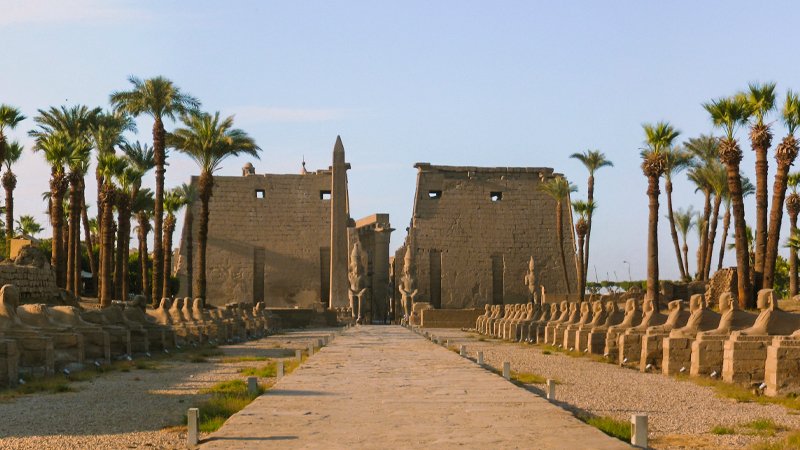
Luxor Temple is one of the most significant ancient Egyptian temples ever built. Located in the center of Luxor on the east bank of the Nile, it was dedicated primarily to the Theban Triad—Amun, Mut, and Khonsu. Unlike many temples constructed solely for daily worship, Luxor Temple served as a ceremonial center where kings renewed their divine authority through sacred rituals.
Construction began during the reign of Pharaoh Amenhotep III in the 14th century BC, with later additions by some of Egypt’s most famous rulers, including Tutankhamun, Horemheb, Ramses II, and even Alexander the Great. Each ruler expanded the temple while preserving its religious importance, creating a remarkable blend of architectural styles that can still be admired today.
One of Luxor Temple’s defining features is its connection to the Avenue of Sphinxes, a ceremonial road stretching nearly three kilometers to Karnak Temple. This avenue played a central role during the annual Opet Festival, when sacred statues of the gods traveled between the two temples in a grand religious procession.
Today, Luxor Temple stands as a UNESCO-recognized treasure and one of the highlights of any visit to Upper Egypt. Its remarkable preservation allows visitors to appreciate the scale, beauty, and artistic achievements of ancient Egyptian builders.
The History of Luxor Temple
Who Built Luxor Temple?
The story of Luxor Temple spans several centuries and reflects the ambitions of many of Egypt’s greatest pharaohs. Construction began under Amenhotep III during the New Kingdom, one of Egypt’s most prosperous periods. His vision included elegant courtyards, impressive colonnades, and beautifully decorated halls dedicated to Amun.
Later rulers continued to enhance the temple. Tutankhamun added detailed reliefs illustrating religious ceremonies, while Horemheb completed sections left unfinished after Tutankhamun’s reign. Ramses II dramatically expanded the entrance by building a monumental pylon, six colossal statues of himself, and two towering obelisks, one of which still stands today. The second obelisk was gifted to France in the nineteenth century and now stands in Paris’s Place de la Concorde.
Centuries later, Alexander the Great also contributed to the temple by constructing a sanctuary, demonstrating the temple’s continuing religious significance long after the era of the pharaohs.
Why Was Luxor Temple Built?
Unlike funerary temples dedicated to deceased rulers, Luxor Temple was designed primarily for religious ceremonies celebrating divine kingship. It played a central role during the annual Opet Festival, one of ancient Egypt’s most important celebrations.
During this festival, priests carried sacred statues of Amun, Mut, and Khonsu from Karnak Temple to Luxor Temple along the Avenue of Sphinxes or by boat on the Nile. The journey symbolized renewal, fertility, and the strengthening of the pharaoh’s divine connection with the gods.
These ceremonies reinforced the ruler’s legitimacy and united religious beliefs with political authority. As a result, Luxor Temple became one of the most important ceremonial centers in ancient Egypt.
What to See Inside Luxor Temple
Walking through Luxor Temple is like stepping into a living museum where every structure reflects centuries of history and craftsmanship.
The Avenue of Sphinxes
Your journey begins at the famous Avenue of Sphinxes, an ancient ceremonial road lined with hundreds of beautifully carved sphinx statues. Recently restored, this remarkable avenue reconnects Luxor Temple with Karnak Temple and offers visitors a glimpse into the grandeur of ancient religious processions.
The Great Pylon and Colossal Statues
The temple’s impressive entrance is dominated by the massive pylon built by Ramses II. Towering statues of the pharaoh guard the gateway, while a single granite obelisk rises toward the sky. These monumental structures demonstrate the extraordinary engineering skills of ancient Egyptian builders and remain among the most photographed features of the temple.
The Great Courtyard
Beyond the entrance lies the spacious Court of Ramses II, surrounded by elegant columns and decorated with detailed hieroglyphic inscriptions. This courtyard once hosted priests, officials, and worshippers during major religious festivals and public ceremonies.
The Colonnade of Amenhotep III
One of the temple’s architectural highlights is the magnificent colonnade built by Amenhotep III. Fourteen towering papyrus-shaped columns create a dramatic walkway leading deeper into the sacred complex. The walls are decorated with beautifully preserved scenes depicting the Opet Festival and royal ceremonies.
The Sanctuary of Amun
At the heart of Luxor Temple lies the sanctuary dedicated to Amun, the chief deity of Thebes. This sacred chamber housed the god’s ceremonial barque during important festivals and represented the spiritual center of the temple. Later additions by Alexander the Great demonstrate how successive rulers respected and preserved the temple’s religious significance.
The remarkable preservation of these structures allows modern visitors to appreciate not only the scale of the monument but also the artistic mastery and religious devotion that defined one of ancient Egypt’s greatest architectural achievements.
Don’t miss our Egypt Vacation Packages.
Visiting Luxor Temple
Planning your visit to the Luxor Temple complex in Egypt is simple, and spending a few hours exploring this extraordinary monument is one of the highlights of any trip to Upper Egypt. Thanks to its central location in the city of Luxor, the temple is easily accessible from hotels, the Nile Corniche, and many Nile cruise ships.
Luxor Temple Opening Hours
Luxor Temple is open daily, allowing visitors to explore the site from early morning until late evening. While daytime visits provide excellent opportunities to admire the temple’s architectural details, many travelers prefer visiting after sunset when the monument is beautifully illuminated. The evening lighting creates a magical atmosphere, highlighting the massive columns, statues, and hieroglyphs against the night sky.
Luxor Temple Tickets
Visitors must purchase an entrance ticket before entering the temple. Ticket prices may vary depending on nationality and student discounts, so it is always advisable to check the latest official rates before your visit. Many guided tours include admission tickets, making them a convenient option for travelers who want a deeper understanding of the temple’s history and symbolism.
Best Time to Visit Luxor Temple
The ideal time to visit Luxor Temple is between October and April, when temperatures are cooler and more comfortable for sightseeing. During these months, visitors can explore the temple without experiencing the intense summer heat common in Upper Egypt.
If you are visiting during the warmer months, consider arriving early in the morning or later in the afternoon. Sunset is particularly rewarding, as the changing light creates spectacular views and provides excellent photography opportunities.
Also, don’t miss reading the full blog about the best time to visit Egypt
How to Get to Luxor Temple
Luxor Temple is conveniently located in the heart of Luxor, making it easy to reach by taxi, private vehicle, horse carriage, or on foot if you are staying nearby. Many travelers also visit the temple as part of a guided tour or while enjoying a Nile cruise between Luxor and Aswan.
The temple is only a short drive from Luxor International Airport and is close to many of the city’s hotels, restaurants, and shopping areas, allowing visitors to combine their visit with other attractions in the area.
Luxor Temple vs Karnak Temple
Many travelers wonder whether they should visit Luxor Temple or Karnak Temple. The answer is simple—if your schedule allows, both deserve a place on your itinerary because each offers a unique perspective on ancient Egyptian history.
Karnak Temple is significantly larger and served as Egypt’s most important religious complex for nearly two thousand years. Its enormous hypostyle hall, sacred lake, and multiple temples make it one of the largest temple complexes ever built.
Luxor Temple, on the other hand, offers a more intimate experience. Its elegant design, beautifully preserved reliefs, and central location make it easier to explore in a shorter amount of time. The temple’s connection to the Opet Festival and royal ceremonies gives it a distinctive historical importance.
The two temples are connected by the restored Avenue of Sphinxes, allowing visitors to appreciate the ceremonial route once used during ancient religious processions. Exploring both sites on the same day provides a complete understanding of the religious and political significance of ancient Thebes.
Tips for Visiting Luxor Temple
A little preparation can make your visit even more enjoyable.
Wear lightweight, breathable clothing and comfortable walking shoes, as you’ll spend much of your time exploring stone pathways and open courtyards. A hat, sunglasses, and sunscreen are essential, particularly during warmer months.
Hiring a knowledgeable guide can greatly enhance your experience. Many of the temple’s carvings tell fascinating stories about ancient Egyptian religion, military victories, and royal ceremonies that may be difficult to understand without expert interpretation.
Photography is permitted throughout most of the temple, making it an excellent destination for both amateur and professional photographers. Early morning and evening offer the most attractive natural lighting, while nighttime visits showcase the temple’s impressive illumination.
After exploring Luxor Temple, consider visiting nearby attractions such as Luxor Museum or the Mummification Museum or enjoying a relaxing walk along the Nile Corniche. If you have additional time, crossing to the West Bank will allow you to discover the Valley of the Kings, the Temple of Hatshepsut, and the Colossi of Memnon.
Final Thoughts
Luxor Temple is far more than an ancient monument—it is a remarkable testament to the creativity, engineering, and spiritual beliefs of one of history’s greatest civilizations. From the towering statues of Ramses II to the elegant columns of Amenhotep III, every section of the temple reveals a chapter of Egypt’s extraordinary past.
Its rich history, magnificent architecture, and central location make it one of the most rewarding places to visit in Egypt. Whether you are passionate about archaeology, fascinated by ancient mythology, or simply looking to experience one of the world’s greatest historical landmarks, Luxor Temple offers an unforgettable journey through more than three thousand years of history.
As one of the best-preserved temples in Egypt, Luxor Temple continues to inspire millions of visitors every year. Walking through its grand halls and sacred sanctuaries provides a unique opportunity to connect with the legacy of the pharaohs and witness the enduring beauty of ancient Egyptian civilization.
FAQs About Luxor Temple
Why is Luxor Temple famous?
Luxor Temple is famous for its remarkable preservation, stunning architecture, and its role in the ancient Opet Festival. It was a major religious center dedicated to the god Amun and served as a place where pharaohs celebrated their divine authority.
How long does it take to visit Luxor Temple?
Most visitors spend between 1.5 and 2 hours exploring Luxor Temple. History enthusiasts or travelers joining a guided tour may choose to stay longer to fully appreciate the temple’s detailed carvings and historical significance.
Is Luxor Temple worth visiting at night?
Yes. Many travelers consider the evening one of the best times to visit because the temple is beautifully illuminated. The lighting highlights the massive columns, statues, and hieroglyphs, creating a memorable and atmospheric experience.
Can you visit Luxor Temple without a guide?
Yes, independent visits are possible, and information panels are available throughout the site. However, hiring a professional guide provides valuable historical context and helps visitors understand the symbolism behind the temple’s impressive artwork and architecture.
What is the difference between Luxor Temple and Karnak Temple?
Karnak Temple is a vast religious complex with multiple temples and sanctuaries, while Luxor Temple is smaller and was primarily dedicated to royal ceremonies and the Opet Festival. Visiting both offers a complete picture of ancient Thebes and its religious traditions.


0 Comment